York Day Tours
I’m Serious Day Tour Man AI, your day trip expert. Ask me anything — where to go, how to get there, and what’s actually worth your day.
York’s day trips read like a Yorkshire syllabus: a steam railway across heather moorland to the harbor town that gave Dracula his landing, a baroque palace that television made a character, and a ruined abbey in a water garden so complete it earned a UNESCO listing.
Add the limestone amphitheater the Dales built without human help, and a spa town whose tearoom queue is a civic institution. The city section covers the Minster, the Shambles at honest density, the free walls, and the ghost-tour economy sorted by register.
Here’s what’s worth a day, with real times and honest trade-offs.

Popular Day Trips

Castle Howard
The Seasonal Logistics, Vanbrugh’s Dome

Whitby
The Moors Crossing, the 199 Steps

Durham
The Forty-Five Minutes, the Finest Norman Nave
Whitby — The 199 Steps and the Harbor
An hour and a quarter northeast, Whitby is the coast day: a red-roofed fishing town split by its harbor, with the ruined abbey on the East Cliff that gave Bram Stoker his atmosphere — Dracula comes ashore here as a black dog, and the town has traded on it gratefully ever since, Goth Weekends included (twice yearly, attended deliberately or scheduled around).
The circuit: climb the 199 steps from the old town’s Church Street to St Mary’s churchyard and the abbey ruin — English Heritage runs the site, and the skeletal arches against a North Sea sky justify every step. Below, the harbor works: the swing bridge, the whalebone arch on the West Cliff, Captain Cook’s museum in the house where he apprenticed (the Endeavour story starts in this town), and boat trips out past the lighthouses.
The eating rule: Whitby fish and chips is a genuine title fight — the Magpie Café is the famous queue, and the town’s rivals are worth a local’s opinion — eaten on the harbor wall against gull ambush, which is part of the experience. The stack: Robin Hood’s Bay, ten minutes south, cascades its smugglers’ village down a ravine to the beach and completes the coast. Full day; the moors road there is half the show.
Read the full Whitby day-trip page.
The Moors Railway & Goathland — Steam Across the Heather
The North Yorkshire Moors Railway is the region’s moving monument: 24 miles of heritage steam (and diesel) from Pickering across the national park to Whitby, run by a volunteer charity, and the busiest line of its kind anywhere. The mechanics: book Day Rover tickets on the railway’s site — they allow hop-on riding through Levisham, Goathland, and Grosmont — check the timetable first because the railway doesn’t run every day outside peak season, and know the Pickering station experience is a preserved 1930s set worth arriving early for.
Goathland is the celebrity stop: the station played Hogsmeade in the first Harry Potter film and the village spent years as Heartbeat’s Aidensfield — take the twenty minutes, then walk the old rail trail to Grosmont past Mallyan Spout waterfall for the earned version.
The moors themselves peak in late August and September, when the heather turns the plateau purple horizon-to-horizon — the single best window for the whole day. The driving alternative loops the Hole of Horcum’s vast amphitheater and Hutton-le-Hole’s sheep-mown green, and Rievaulx Abbey — the Cistercian ruin in its wooded valley near Helmsley — is the connoisseur’s add-on. Combine railway and Whitby in one day by riding through; the return leg watches the same moor change light.
Castle Howard — The Palace That Plays Itself
Forty minutes northeast, Castle Howard is Yorkshire’s baroque astonishment: Vanbrugh’s domed palace — begun in 1699 by a playwright who had never built anything, which explains the theatricality — set in a thousand acres of temples, lakes, and the mausoleum that started English architecture’s love affair with the classical landscape. Television made it a character twice over: Brideshead Revisited (both versions) and Bridgerton filmed here, and the house wears the fame lightly.
The visit: the interiors run the Great Hall’s painted dome (rebuilt after the 1940 fire the house is candid about), the antique-crammed corridors, and the chapel’s Burne-Jones windows; the grounds run the Atlas Fountain, the Temple of the Four Winds, and the walled rose gardens. House-plus-grounds tickets book online; grounds-only serves fine days honestly, because the exterior composition is the masterpiece.
The frame: it’s a half-to-full day by pace, family-friendly (the adventure playground buys parents an hour), and the estate farm shop handles lunch. The Howards still live here, which keeps the house feeling inhabited rather than embalmed — the quality most stately homes can’t buy. Christmas dressing (November–December) is the region’s best and books ahead.
Read the full Castle Howard day-trip page.
Fountains Abbey & Harrogate — The Ruin and the Tearoom
Fifty minutes west, Fountains Abbey is Britain’s largest monastic ruin and its most complete: the Cistercian church and cloisters standing to full height in the Skell valley, folded into Studley Royal’s Georgian water garden — moon ponds, follies, and sight lines built specifically to reveal the ruin as the climax. The pairing is the UNESCO listing’s whole argument, and the National Trust runs it: book or arrive early on summer weekends, allow three hours minimum, and walk the full circuit to the surprise view rather than shortcutting. The deer park above adds red deer and the St Mary’s church spire for free.
Harrogate, fifteen minutes on, is the spa-town counterweight: the Montpellier quarter’s antique shops, the Turkish Baths — the restored Victorian Moorish interior, bookable for sessions, and the county’s best rainy-hour ticket — and Bettys, the 1919 tearoom whose queue is a Yorkshire institution. The queue moves, the Fat Rascal justifies it once, and the café’s Yorkshire Tea heritage is real.
Knaresborough, ten minutes further, finishes the day at the postcard: the railway viaduct over the Nidd gorge, rowing boats below, and Mother Shipton’s Cave — England’s oldest entry-fee attraction — petrifying teddy bears in its mineral well since 1630.
Malham & the Dales — The Limestone Day
Ninety minutes west, the Yorkshire Dales day centers on Malham, where three of Britain’s great limestone features sit within one walk. Malham Cove is the headliner: a 260-foot curved cliff — a dry waterfall taller than Niagara when it last flowed — with the famous limestone pavement across its top, reached by 400-odd steps, its clints and grikes filmed for the wizarding franchise and photographed by everyone since. Peregrines nest on the face in season, with volunteer scopes below.
The circuit: the classic loop runs Malham village to the Cove, up and over to Gordale Scar — the slot gorge whose waterfall scramble is optional and honestly graded — and back via Janet’s Foss’s mossy waterfall pool. Eight miles or trimmed to taste, on paths that want real footwear. Malham Tarn, the glacial lake above, extends it for the committed.
Weekend parking in Malham fills by mid-morning (the national park’s overflow field and an early start beat it), the Dales’ dry-stone-wall-and-barn landscape is the drive’s own payoff, and Grassington or Settle supply the market-town lunch. The Ribblehead Viaduct — the Settle–Carlisle line’s 24 arches across blanket bog — is the detour for anyone who has ever liked a train. This is the boots day; the abbey days above serve the shoes crowd.
The Minster, the Shambles & York Itself
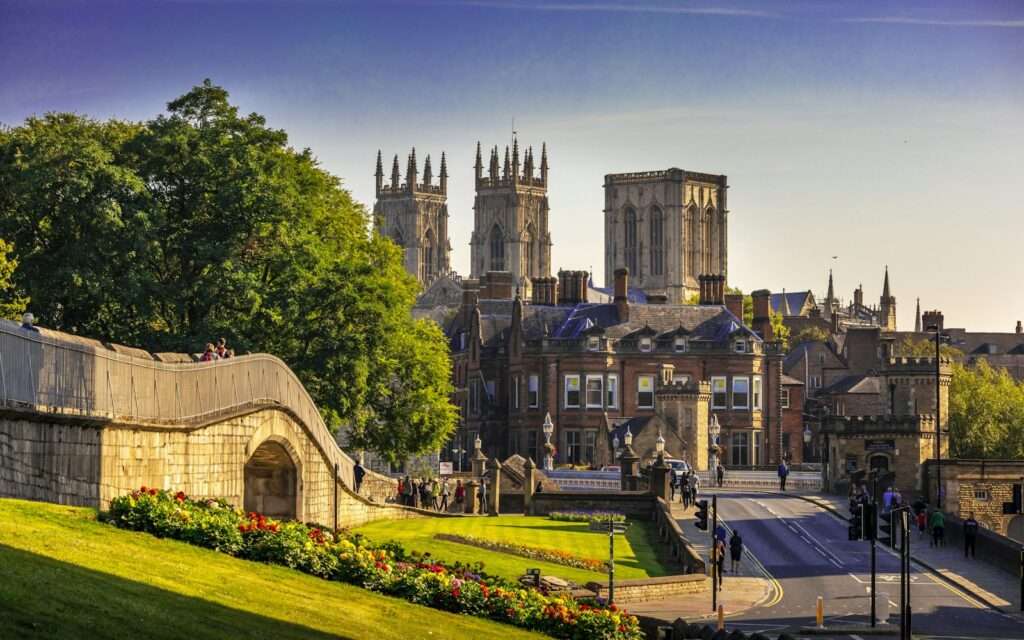
The Minster first: northern Europe’s largest Gothic cathedral, with the Great East Window — the country’s largest expanse of medieval stained glass — newly legible after restoration, and the central tower’s 275 steps selling timed climbs for the rooftop view of the whole walled city. The undercroft museum tells the Roman-to-Norman layers beneath the crossing; the free evensong is the building doing what it was built for.
The city’s own circuit: the walls — the most complete in England, free, two miles of elevated walking with the Minster views from the north stretch — the Shambles taken at honest density (the medieval butchers’ lane is genuinely lovely and genuinely rammed by 11; go before 9 or after 5, and know the wizard-shop economy is recent), and the snickelways, the named maze of cut-throughs that reward aimlessness. Jorvik handles the Viking layer with its ride-and-smells sincerity (book ahead); the Castle Museum’s recreated Victorian street and the National Railway Museum — free, vast, home of Mallard and the Flying Scotsman’s shed — cover the rest.
The register sort for the evening: York claims Europe’s most haunted title, and the ghost-walk economy runs from genuinely theatrical storytelling to costumed pub-crawl — pick by intent, and the original Ghost Hunt of York school is the storytelling end. Eat the Yorkshire pudding as a course, drink in the Blue Bell or the House of the Trembling Madness, and mind the race days: the Knavesmire meetings fill the city with hats and reprice the hotels. Season math: May, June, and September are the windows; the Christmas market (mid-November on) is one of England’s best and densest; and February’s Viking festival storms the streets deliberately.
Full day-trip pages: Durham.
Frequently Asked Questions
How do you combine the steam railway and Whitby?
Ride the North Yorkshire Moors Railway through from Pickering — Day Rover tickets on the railway’s site allow hop-offs at Goathland and Grosmont — and take your Whitby hours before the return leg. Check the timetable first; the railway doesn’t run daily outside peak season.
Is Castle Howard worth it against the region’s abbeys?
It’s a different register — living baroque palace against monastic ruin — and the honest answer is both: Castle Howard for the domed theatricality and grounds, Fountains for the UNESCO ruin-in-a-water-garden. Neither substitutes for the other.
When do the moors turn purple?
Late August into September — the heather window is the single best time for the railway, the Hole of Horcum, and every moor road. Book that fortnight ahead; Yorkshire knows.
How hard is the Malham Cove walk?
The Cove itself is an easy 20 minutes from the village plus 400 steps to the pavement on top. The classic loop through Gordale Scar and Janet’s Foss runs about eight miles on real paths — boots, not trainers, and an early start for the parking.
What’s free in York?
The city walls (two miles, the best free attraction in the north), the National Railway Museum, Minster evensong, and the snickelways. Save the tickets for the Minster tower climb and Jorvik, both booked ahead in season.