Fountains Abbey and Studley Royal
Nine centuries of Cistercian stone in a Yorkshire valley, joined to a Georgian pleasure garden — one World Heritage Site, one unhurried day.
The short version
- Without a car it takes two legs: train from York to Harrogate (about 35 minutes), then the frequent 36 bus to Ripon (about 35 more) — the abbey sits 4 km beyond Ripon, covered by taxi, a seasonal link bus when running, or a footpath walk. Bus times at transdevbus.co.uk.
- Book tickets and check hours at nationaltrust.org.uk — the estate closes Fridays from November to January, and last entry runs 90 minutes before the gates.
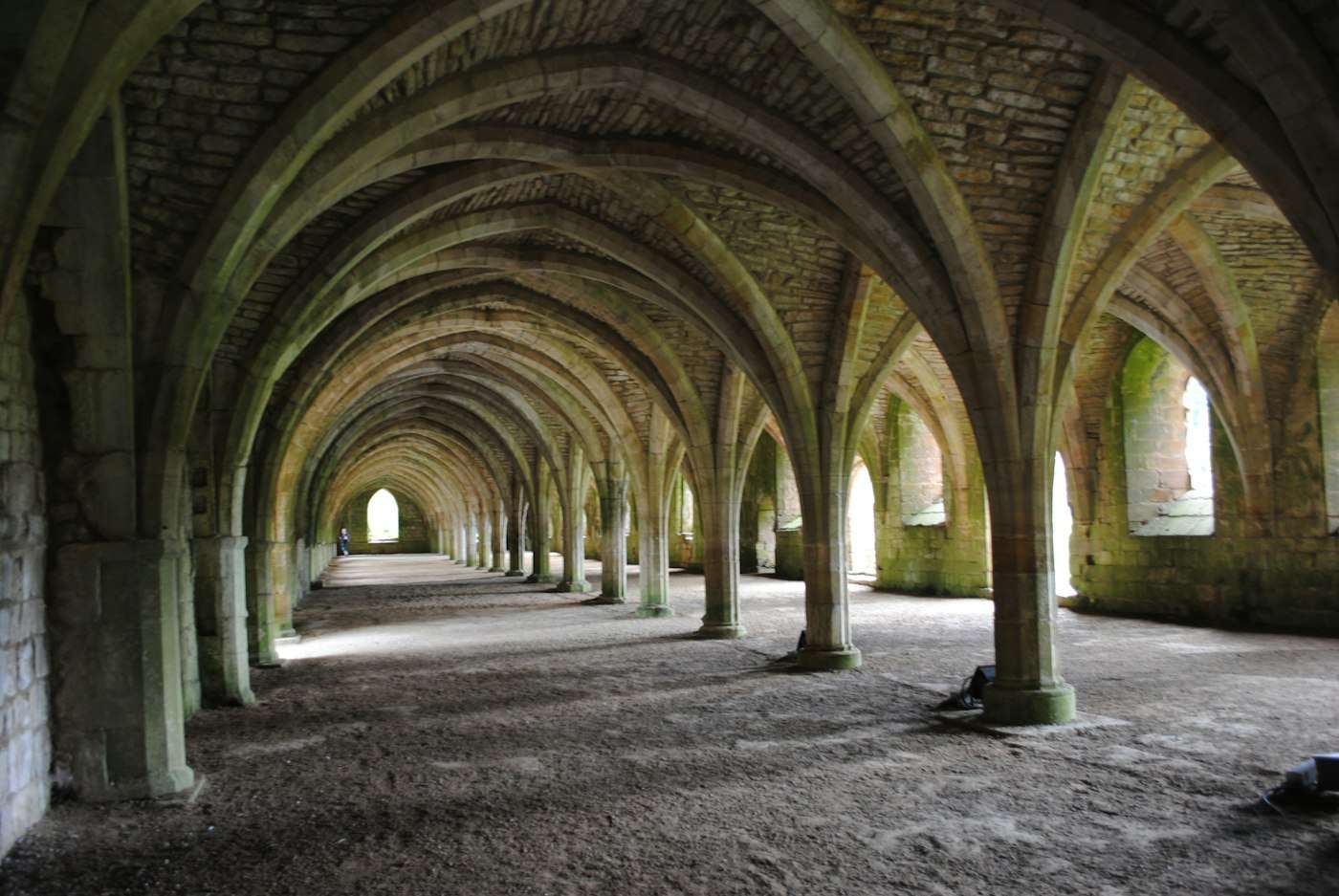
- The abbey is the largest monastic ruin in England: founded 1132, dissolved 1539, and still standing to full height in places — the 90-meter vaulted cellarium is the image on every Yorkshire brochure for a reason.
- Studley Royal, joined to the ruins, is a Georgian water garden of moon ponds, temples, and follies, designed so the abbey appears as the climax of the walk — the “surprise view” is engineered and still works.
- The medieval deer park above — red, fallow, and sika herds under ancient limes — costs nothing and closes the day gently.

Getting there
Trains run from York to Harrogate about twice an hour and take 35 minutes; the 36 bus — a frequent, comfortable trunk route — continues to Ripon in another 35. From Ripon’s bus station, the abbey visitor centre is four kilometers: local taxis do it in ten minutes (book the return), a seasonal link service runs on some summer and weekend timetables, and a signed walking route covers it on foot in under an hour. Drivers take the A59 and B6265 from York in about 50 minutes.
The day
Enter at the visitor centre and drop down to the ruins first, while the valley is quiet: the abbey’s scale arrives all at once — tower, nave, and the cellarium’s unbroken run of vaults where 13th-century lay brothers stored a wool empire. Fountains was the richest Cistercian house in England when Henry VIII’s dissolution stopped it mid-breath in 1539. Walk the river path into Studley Royal next: John Aislabie spent a Georgian fortune bending the River Skell into mirrors — the Moon Pond, the Temple of Piety, follies on the wooded rim — all composed to deliver the abbey as a borrowed ruin at the walk’s climax. Take the high path back for the surprise view, lunch at the mill or visitor centre café, then finish among the deer under St Mary’s church spire in the park above. Four hours covers it; five lets you stop looking at your watch.
When to go
April through October for full hours and the gardens in leaf — autumn turns the valley copper and is the photographers’ pick. Winter has its own severity and the crowds vanish, but note the Friday closures November to January and the shorter afternoons. Summer weekends are family-busy at the visitor centre end yet the estate swallows numbers easily once you walk.
Frequently Asked Questions
How do you get to Fountains Abbey from York without a car?
Train to Harrogate (35 minutes), the 36 bus to Ripon (35 minutes), then a taxi, seasonal link bus, or 4 km footpath to the gates. Book the return taxi in advance — they don’t cruise Ripon’s edge.
What does Fountains Abbey include?
One ticket covers the abbey ruins, Fountains Hall, the mill, and the Studley Royal water garden; the medieval deer park is free. National Trust and English Heritage members enter free.
Why is the abbey famous?
It is England’s largest and best-preserved Cistercian ruin — founded 1132, a wool-trade power for four centuries, dissolved in 1539 — and, with Studley Royal’s garden, a UNESCO World Heritage Site since 1986. The cellarium’s vaulted corridor is its signature.
How much walking is the visit?
Three to six kilometers depending on appetite: ruins, water garden circuit, and deer park are all connected paths at valley grades. Buggies and wheelchairs manage the main routes; the high-rim paths are steeper.
Is winter worth it?
Yes for atmosphere — bare trees, mist, empty ruins — with caveats: closed Fridays November–January, shorter hours, and the water garden’s fountains sleep. A crisp February morning here is a private World Heritage Site.